

CompostEra provides more sustainable public toilets at Axmar Bruk
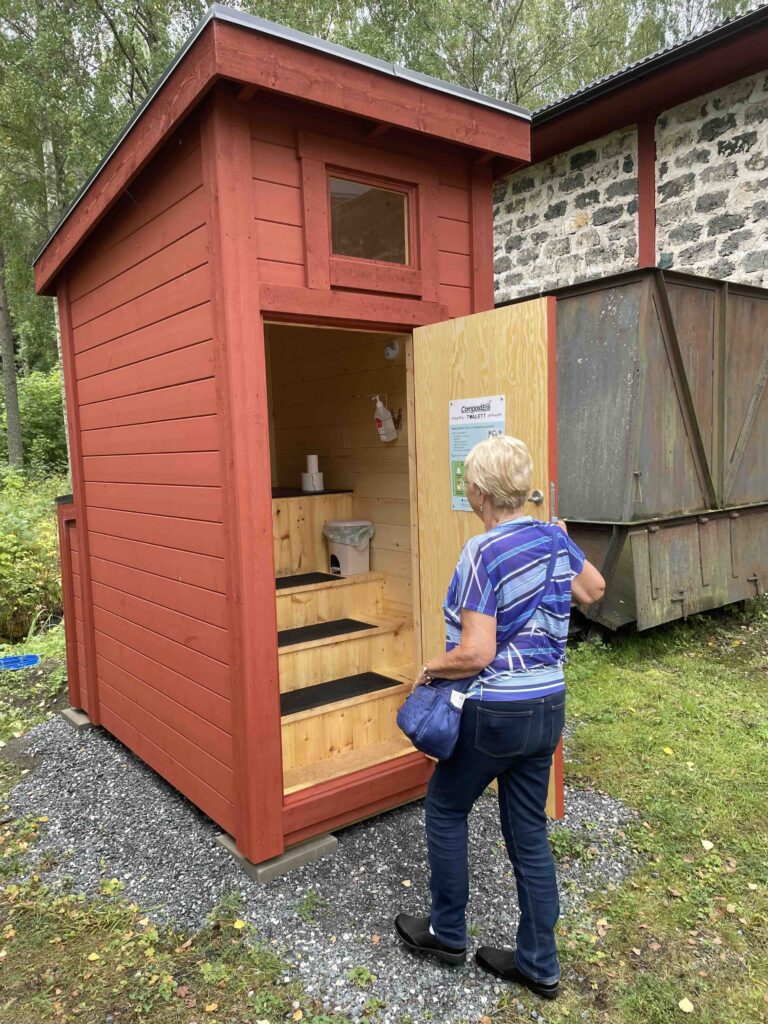
Two CompostEra toilet cabins at Axmar Bruk have demonstrated how public toilets can be made more pleasant, more sustainable and significantly more cost-effective – without water, sewage or frequent emptying.
At the historic Axmar Bruk, 40 km north of Gävle, Sweden, two CompostEra toilet cabins have been in use since June 2026. The toilets have demonstrated that a new generation of waterless, sewage-free toilets can work effectively even in locations with large numbers of visitors.
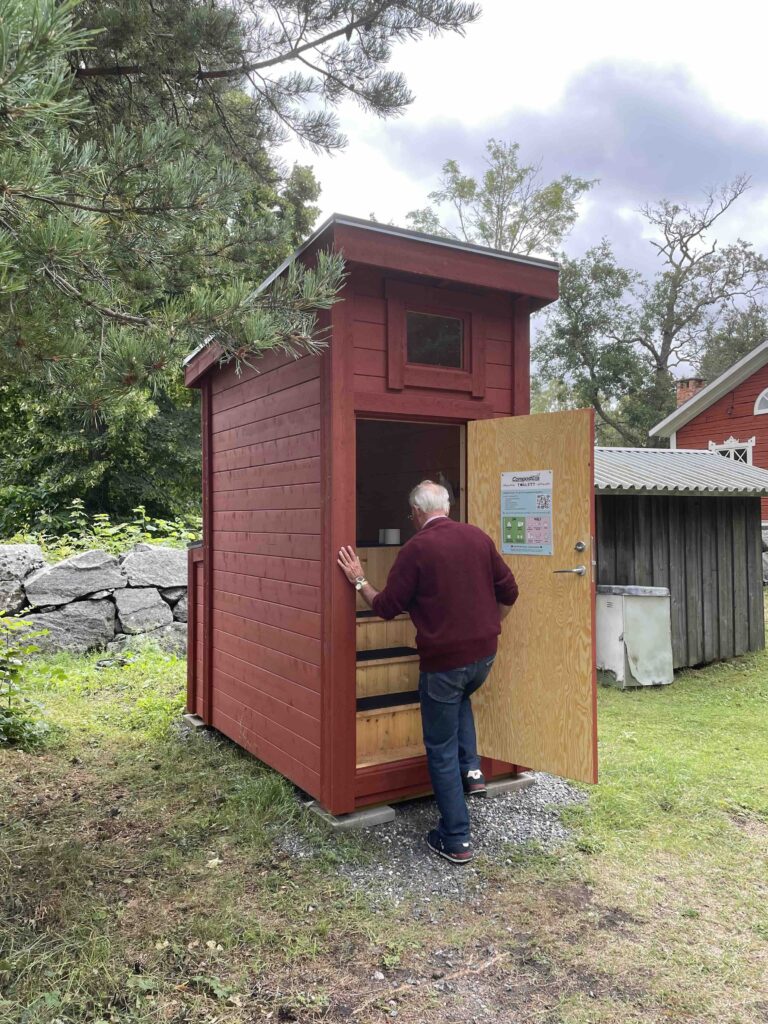
One of the cabins is located beside Axmar Bruk’s historic Hyttan, the former ironworks, while the second serves visitors at a popular outdoor swimming area. Axmar Bruk has more than 60,000 visitors each year, with various cultural events, concerts and weddings.
A better toilet experience for visitors
Traditional outhouses are not always the most pleasant solution for busy public spaces. Odours, unpleasant sights and the need for regular emptying can all become challenges during the summer season.
CompostEra toilet cabins take a fundamentally different approach. They operate without water, electricity or connection to a sewage system, using a controlled composting process to transform toilet waste into a stable and odourless liquid fertiliser that is free from bacteria associated with toilet wastewater. The cabins themselves are odour-free with limited visibility down the toilet, providing visitors with a considerably more pleasant toilet experience.
“We are extremely pleased with how well the cabins have performed at Axmar Bruk,” said Richard Cutler, Managing Director at CompostEra. “These are exactly the kind of environments where we wanted to demonstrate that our solutions can work – in busy public spaces.”
Eliminating the need for frequent emptying
The benefits are not only about the visitor experience. Axmar Bruk has been able to permanently close several of its traditional outhouses, which have previously cost up to 16,000 SEK per year to empty.
The CompostEra cabin at the swimming area alone avoided the need to empty the previous outhouses four times during July and August, representing a saving of approximately 3,200 SEK over just two months. And unlike conventional toilets, the CompostEra cabins are designed to operate for many years before the composting system needs to be emptied and restarted.
CompostEra toilet cabins can significantly reduce both operating costs and the logistical burden associated with public toilets in locations where sewage connections are unavailable or expensive.
“What is particularly exciting is seeing the economics work alongside the environmental benefits,” said Cutler. “We are demonstrating that a more pleasant and sustainable toilet solution does not have to mean higher operating costs. In fact, our solution can be a much more cost-effective way of providing public toilets.”
Turning waste into a resource
The environmental benefits extend beyond eliminating water consumption and sewage infrastructure. Because the CompostEra cabins do not require regular removal of toilet waste, they can substantially reduce the need for waste transportation – and the associated truck emissions.
They also avoid sending the waste to a conventional wastewater treatment plant. Instead, the composting process keeps the nutrients within a closed circular system.
During July and August, approximately 40 litres of odourless liquid fertiliser was collected from the two CompostEra toilet cabins at Axmar Bruk. Rather than treating this as waste, CompostEra’s agricultural partner will use it as a nutrient-rich fertiliser. The fertiliser will be used in Gävle in the spring 2027, creating a closed loop from human waste back into agriculture.
An off-grid toilet solution
One of the two CompostEra cabins at Axmar Bruk is also demonstrating the potential for completely off-grid operation. The cabin is powered by a solar panel and battery system, which eliminates the need for a connection to the electricity grid.
Combined with its waterless and sewage-free design, this means the cabin operates completely independently of conventional infrastructure – making the technology particularly attractive for remote locations, nature reserves, beaches, golf courses and other public spaces where connecting to water, sewage and electricity would be difficult or costly.
The future for more sustainable public toilets
The sturdy wooden CompostEra toilet cabins will continue to serve visitors at Axmar Bruk for many years. But for CompostEra, they represent an important milestone.
“Axmar Bruk gave us the opportunity to prove that our toilet cabins are not just an interesting concept – they can be a practical odour-free toilet solution that requires minimal maintenance, promotes the more circular use of resources and reduces costs,” concluded Cutler. “We will take what we have learned at Axmar Bruk and bring more waterless, sewage-free sanitation to more public spaces.”
More information
The two CompostEra toilet cabins at Axmar Bruk were financed by Gävle Municipality. According to Aktuell Hållbarhet’s ranking, Gävle was Sweden’s third most environmentally friendly municipality in 2025. www.gavle.se
Read more about Axmar Bruk at www.AxmarBruk.se